
Anthropic Expands Evaluator Access as METR Flags Evidence Gaps
Anthropic announced on October 15, 2026 that a six-person METR team had begun receiving internal access comparable to its own risk-assessment staff. The arrangement includes publication rights, subject to defined redaction categories. Anthropic says it cannot veto publication, while retaining authority over whether information falls within those categories. Anthropic’s announcement, clarified October 16.
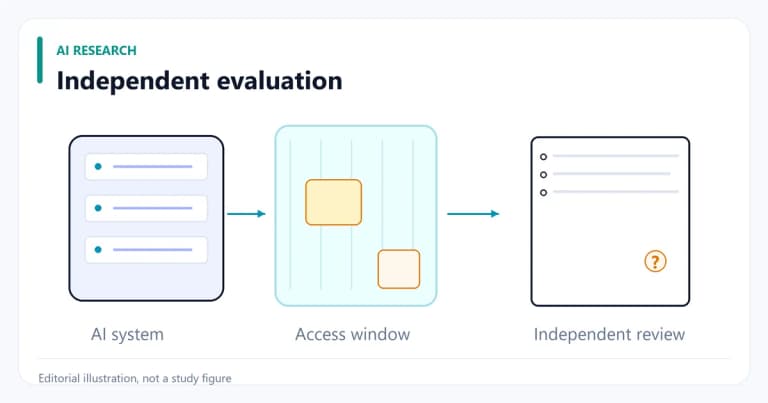
A separate METR review published on October 20 makes the access distinction important. Its authors say they worked under an earlier, narrower agreement and did not receive the newly announced access. Anthropic could veto that review, but METR reports no redactions and no changes to its conclusions during publication review. METR’s review and scope statement.
Three documents, different roles
Primary-source timeline for the evaluator discussion
| Date | Document | What it describes |
|---|---|---|
| October 14 | METR approach | Principles for evidence and independence. |
| October 15 | Anthropic announcement | Expanded evaluator access. |
| October 20 | METR review | An assessment under earlier terms. |
Sources: METR approach, access announcement, and published review.
What the latest review concludes
METR tentatively agrees that catastrophic misalignment risk was low for the models covered by Anthropic’s August report, primarily because of limited capabilities. It is not confident that the report’s methods would reliably detect higher risk. This is a qualified judgment about a defined model set, not a blanket certification of every current or future system. METR executive summary.
In its October 14 statement, METR says its role is to provide public evidence, rather than decide how companies should deploy agents. It commits to describing material access restrictions, redactions, and conflicts of interest. METR’s stated evaluation approach.
Editorial analysis: read the conditions before the conclusion
For researchers comparing safety reports, access and independence should be explicit columns in the evidence table. Ask which models were examined, when testing occurred, what investigators could inspect, and what findings they were allowed to publish. The date on a report is not necessarily the date of the systems it evaluates.
A useful reading practice is to separate observations, methodological limitations, and the evaluator’s overall judgment. Agreement on a headline risk label can coexist with disagreement about the strength of the supporting argument. Broader access may improve future assessments, but the value of the new arrangement will depend on the evidence and limitations those assessments eventually disclose.